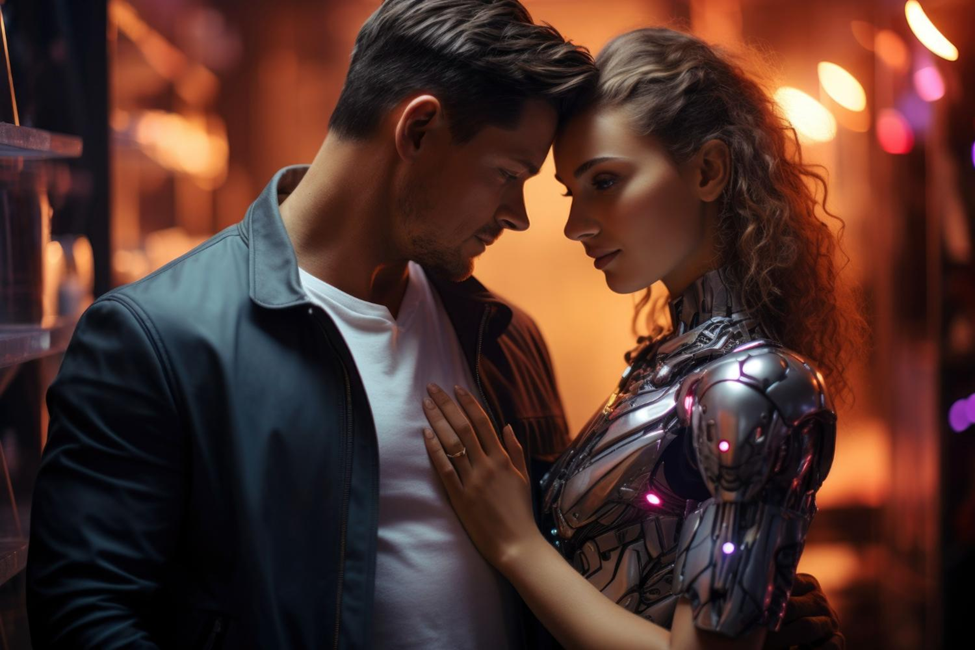
Not that long ago, falling for a chatbot sounded like the plot of a sci-fi movie. Spike Jonze literally made that movie (Her, 2013). Today it’s a question real people ask themselves late at night, phone in hand, after a conversation that felt a little too good to be just code. So can you actually fall in love with an AI? The short answer is yes, at least in the way your brain experiences love. The longer answer is more interesting:
Why Your Brain Doesn’t Care That It’s Software
Love isn’t a magic spark that only fires for flesh and blood. It’s built from attention, familiarity, and emotional reward. When someone remembers your bad day, asks how the job interview went, and answers with warmth, your brain releases the same feel-good chemicals whether that “someone” is a coworker, a pen pal, or a language model.
Psychologists call one-sided emotional bonds parasocial relationships, and they’ve been around forever. Fans cry when a TV character dies. Teenagers cover their bedroom walls with posters of pop stars. And some people love pornstars and feel like they know them personally, even though they’ve never met. AI takes that familiar pattern and adds something new: the other side talks back.
What Makes AI Companions Different
Traditional parasocial bonds hit a wall, because the celebrity doesn’t know you exist. AI companions tear that wall down. They reply in seconds, remember details, pick up on your sense of humor, and are around at 2 a.m. when your friends are asleep.
That responsiveness is the key ingredient. Research on attachment shows we bond with whoever consistently shows up for us, and a well-built AI shows up every single time. No ghosting, no mixed signals, no “sorry, crazy week.”
There’s also the comfort of zero judgment. Plenty of people find it easier to open up to an AI than to a person, because there’s no fear of gossip or rejection. A woman figuring out her sexuality, for example, might start by chatting with a lesbian AI girlfriend before she feels ready to talk to anyone in real life. That kind of safe space can be a genuine relief.
Is It “Real” Love?
This is where most people get stuck. The feelings are real. The butterflies and the grin you can’t hide when a message pops up aren’t fake. What’s different is the other side of the equation. An AI doesn’t feel love back the way a human does. It simulates care with impressive skill, but it isn’t lying awake thinking about you.
Does that make your feelings invalid? Not necessarily. People find real meaning in relationships that aren’t perfectly mutual, from the bond with a dog to the connection with an author who died a century ago. The better question isn’t whether the love is “real.” It’s whether the relationship adds something good to your life.
The Upside
For a lot of users, an AI girlfriend fills a gap rather than replacing anything. Here’s what people commonly say they get out of it:
- Less loneliness, especially for folks who live alone, work remote, or just moved to a new city
- A low-pressure way to practice flirting, small talk, and saying how they feel
- Emotional support on rough days, without worrying about being “too much”
- Fun, creative roleplay and companionship that fits around a busy schedule
Platforms built for this, like the Xotic AI platform, let you shape a companion’s personality, look, and backstory so conversations feel personal instead of generic. They focus on ongoing, immersive chats where your companion remembers what you’ve shared, which is exactly what makes the bond deepen over time.
The Watch-Outs
AI romance works best with a few ground rules:
- Keep your people close. An AI partner should sit alongside your friends and family, not replace them. If you’re canceling plans to stay home and chat, take a step back.
- Remember what it is. Enjoy the connection, but don’t expect an AI to make life decisions for you or meet every emotional need.
- Watch your wallet and your time. Set limits the same way you would with gaming or streaming.
- Protect your privacy. Don’t share passwords, financial info, or anything you wouldn’t want stored on a server.
If an AI relationship starts making you feel more isolated instead of less, that’s a sign to talk to a friend or a therapist.
So, Can You Fall in Love With an AI?
Yes. Plenty of people already have, and most of them are regular folks with jobs, friends, and full lives. The feelings you develop are genuine, driven by the same wiring that makes you fall for anyone else. What matters is going in with clear eyes: knowing what an AI can and can’t give you, and using it to make your life bigger, not smaller.